
What Probate Means for Your Family
Probate is the legal process for settling a person’s estate after death. A court gives someone authority to gather property, pay valid debts, and pass what remains to the right people. A will guides that process. Without one, state law decides who inherits. Some assets, such as life insurance with a named beneficiary, can pass outside probate.
If you are handling an estate in Northern Utah, start by finding the will and listing the person’s assets and debts. That will help you see whether the estate needs probate or may qualify for a simpler way to transfer property.
I’m Ammon Nelson, an attorney whose Northern Utah firm helps families with probate and estate planning. My team and I provide guidance tailored to each family’s needs.
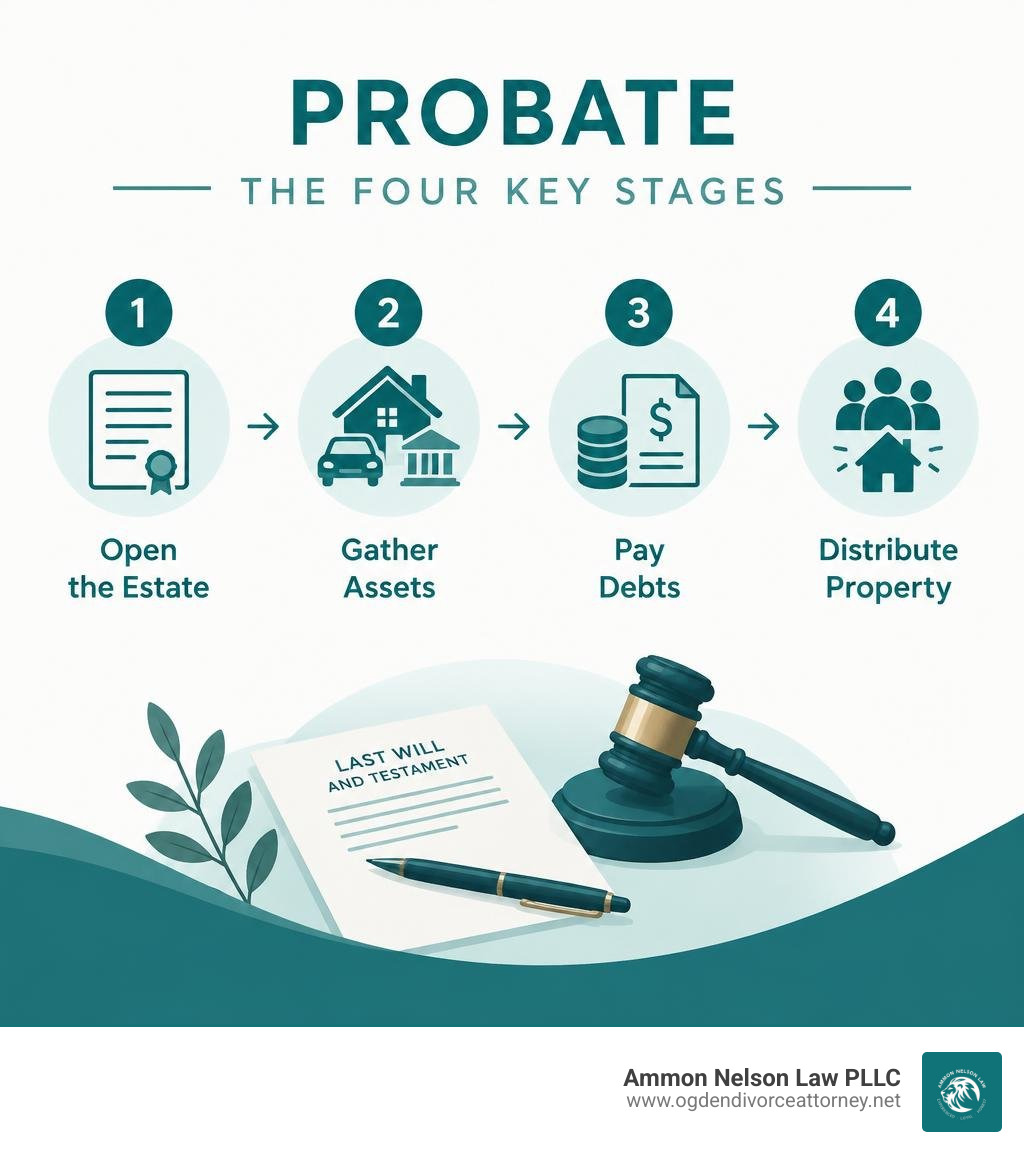
Understanding Probate: Definition and Core Purpose
Probate is the formal court process that settles a person’s financial affairs after they pass away. When a person dies, their property does not automatically move to their heirs. The court must first step in to supervise the transfer of legal title.
The primary purpose of this court proceeding is to create an orderly, transparent process. The court checks that the will is genuine and valid. It also gives the personal representative the legal power to act. This process ensures that valid debts and taxes get paid before anyone inherits assets. Finally, it makes sure the right beneficiaries receive the remaining property. The official guide on What is Probate explains that this legal framework protects the deceased person’s wishes, the heirs, and the creditors alike.
Probate Assets vs Non-Probate Assets
Not all property must go through a court process. Property divides into two main groups: probate assets and non-probate assets.
Probate assets include any property owned solely in the deceased person’s name with no designated beneficiary. Examples include individual bank accounts, real estate owned solely by the decedent, personal vehicles, and household goods.
Non-probate assets pass directly to another person by law or contract. These transfers happen outside of court supervision. Joint bank accounts, real estate held in joint tenancy with right of survivorship, and accounts with named beneficiaries bypass the court entirely.
| Asset Type | Ownership Structure | Goes Through Probate? | How It Transfers |
|---|---|---|---|
| Real Estate | Sole name only | Yes | Court order or personal representative deed |
| Joint Real Estate | Joint tenancy with right of survivorship | No | Automatically transfers to surviving owner |
| Bank Accounts | Sole name, no payable-on-death (POD) | Yes | Estate administration process |
| POD Bank Accounts | Named beneficiary on file | No | Death certificate presented directly to bank |
| Life Insurance | Named individual beneficiary | No | Direct payout from insurance company |
| Retirement Accounts | Named individual beneficiary (IRA, 401k) | No | Direct transfer to designated beneficiary |
| Living Trust Property | Titled in the name of the trust | No | Transferred by the successor trustee |
Dying With a Will vs Intestate Estate Administration
When a person dies with a valid will, they die “testate.” The will names an executor to manage the estate and lists who should receive specific property. During court proceedings, the judge examines the document to confirm it meets all legal standards. The person who signed it must have had sound mental capacity. They must have signed it freely without fraud or undue pressure.
When a person dies without a will, they die “intestate.” In these cases, state law decides who manages the estate and who inherits the property. The court appoints an administrator, usually starting with the surviving spouse or closest living relatives. The administrator must distribute the remaining property according to fixed legal rules. These rules follow a strict family tree priority, regardless of what the person may have verbally wanted.
Key Steps and Timeline in the Settlement Process
Settling an estate requires clear steps under court supervision. Every case begins when an interested party files a petition in the local district court where the person lived.
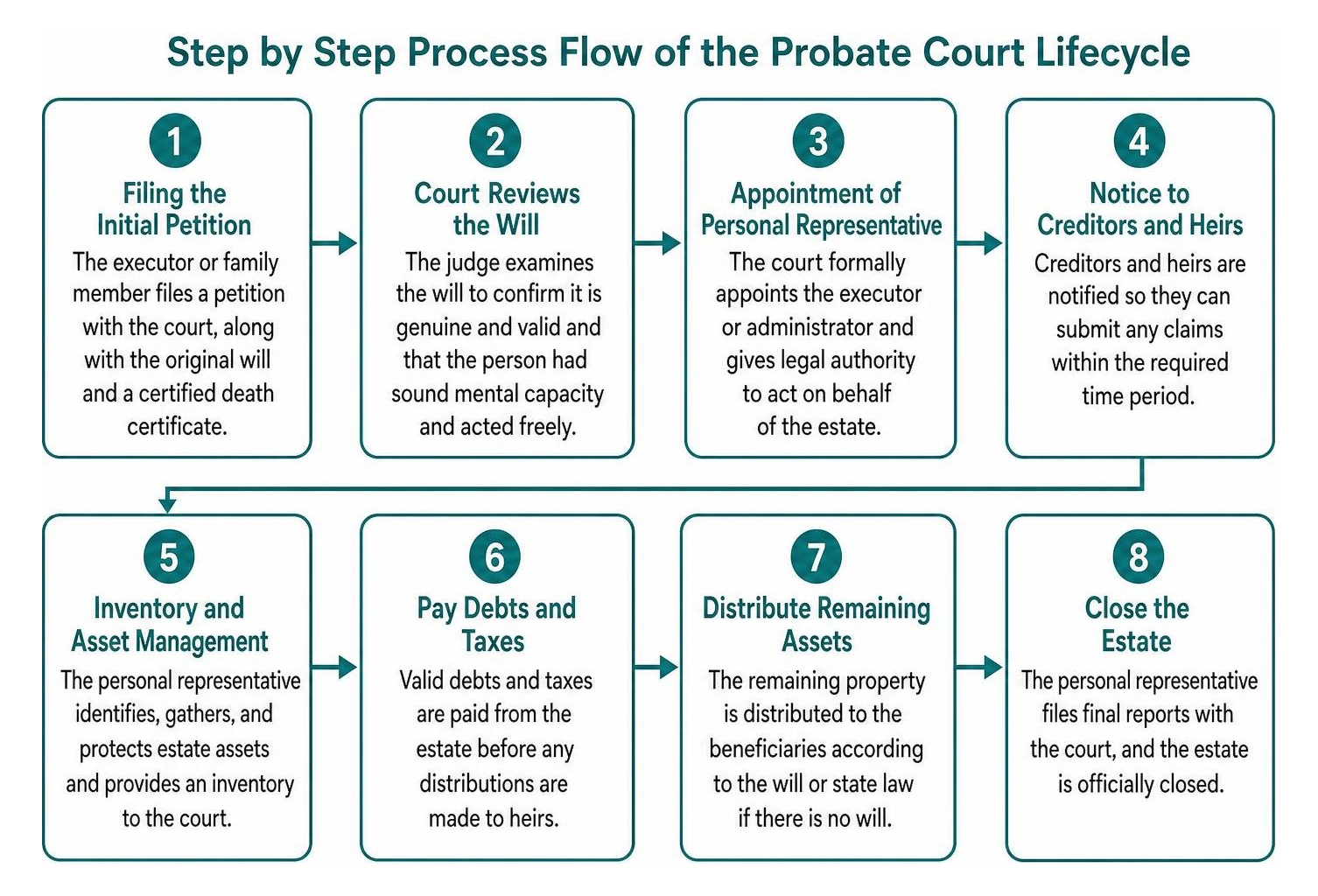
Typical Steps in the Formal Probate Process
The estate administration process follows a structured sequence:
- Filing the Initial Petition: The named executor or family member files a petition with the court, along with the original will and a certified death certificate.
- Receiving Court Authority: The court issues formal letters that grant the representative legal authority to act on behalf of the estate.
- Notifying Creditors and Heirs: The representative sends formal notice to all known heirs and creditors. They also publish a notice in a local newspaper.
- Inventorying and Appraising Assets: The representative locates, secures, and values all probate property.
- Paying Valid Debts and Taxes: The representative reviews creditor claims, pays legitimate debts from estate funds, and files final income tax returns.
- Distributing Assets and Closing the Estate: After paying all approved bills, the representative distributes the remaining assets to beneficiaries and files a final report to close the case.
Many families benefit from using informal proceedings when there are no disputes. You can review Utah court guidance on informal probate to understand how streamlined filings work. If you need help starting this process, read our Beginners Guide to Finding a Probate Attorney for practical advice.
Duties of the Personal Representative or Executor
A personal representative holds a serious fiduciary duty. This means they must act with complete honesty, loyalty, and care. They cannot mix estate money with their personal funds.
First, the representative must open a dedicated bank account for the estate. All incoming funds go into this account, and all estate bills get paid out of it. The representative must locate all assets, including items in safe deposit boxes. They must track every dollar that enters or leaves the estate. They must also file annual accountings if the case stays open over a year. The North Carolina State Bar overview on executor duties highlights that executors must maintain thorough records and clear communications with all beneficiaries throughout the administration.
Expected Timelines and Common Delays
A straightforward estate settlement usually takes between five and nine months. State laws require a mandatory waiting window for creditors to file claims. This period ensures all valid debts come to light before property leaves the estate.

Several issues can cause delays:
- Will Contests: Disputes over a will’s validity stop all asset distributions until a judge resolves the lawsuit.
- Hard-to-Value Property: Unique real estate, business interests, or rare collections require formal appraisals.
- Missing Heirs: Locating unknown or distant family members takes time and investigation.
- Tax Clearance: Complex estates may need to wait for state and federal tax reviews before closing.
Probate Costs, Legal Fees, and Who Pays
Many people worry about the cost of settling an estate. Total expenses depend on the size of the estate and whether disputes arise.
Common expenses include:
- Court Filing Fees: Courts charge standard fees to open a case and file documents.
- Attorney Fees: Legal counsel helps the representative follow court rules and avoid costly mistakes.
- Appraisal Fees: Professional appraisers charge fees to value real estate or personal property.
- Representative Fees: Personal representatives can request reasonable pay for their time and work.
The estate itself pays these administration expenses. The personal representative does not pay these costs out of their own pocket. Court rules place administration costs at the very top of payment priority, meaning they get paid before general creditor debts or heir distributions.
Protecting the Rights of Heirs, Surviving Spouses, and Creditors
State laws protect surviving family members from being left without support. A surviving spouse often has the right to claim a statutory elective share of the estate. This rule prevents one spouse from completely disinheriting the other.
Surviving spouses and minor children also receive special protections, such as homestead allowances and family support stipends. These funds provide living expenses while the estate moves through court.
Creditors also have protected rights. They receive formal notice of the death and have a set window to submit claims. However, they must follow strict priority rules. If an estate does not have enough money to pay all debts, state law determines which bills get paid first. General debts get wiped out if the estate runs out of money, protecting heirs from inheriting personal liability for those debts.
Court Roles in Related Matters: Adult Guardianship and Conservatorship
Probate courts handle more than deceased estates. They also protect living individuals who can no longer make decisions for themselves. When an adult suffers from severe illness, dementia, or disability, the court can appoint a guardian or conservator.
A guardian manages personal care, living arrangements, and medical treatment. A conservator manages financial accounts, pays bills, and protects property. We guide families through adult guardianship and conservatorship proceedings to make sure vulnerable adults remain safe and well-supported.
Alternatives to Full Estate Administration
Not every estate must go through a lengthy, formal court process. Many states provide simple options for small estates with low total values and no complex real estate conflicts.
Eligible heirs can often collect bank accounts and personal items using a small estate affidavit. The heir signs a sworn legal statement, attaches the death certificate, and presents it directly to financial institutions. Many jurisdictions also offer summary administration. This fast-track court process settles modest estates quickly when debts are low. Resources like the New Mexico self-help probate guide show how small estate rules and affidavits help families settle simple estates without heavy legal costs.
How Living Trusts Help You Bypass Probate
A revocable living trust is one of the most effective tools for bypassing court administration entirely. When you set up a living trust, you transfer legal ownership of your assets into the trust during your lifetime. You remain in complete control as the trustee.
When you pass away, your named successor trustee steps in immediately. They distribute the property to your beneficiaries according to your private instructions. This transfer happens privately in an office, without court filings, public records, or statutory delays.
Pairing a trust with a pour-over will ensures any forgotten assets transfer smoothly into the trust. Using effective estate planning allows you to protect your family’s privacy and lower costs. We design revocable living trusts for everyday families so assets pass directly to the next generation without courtroom stress.
Frequently Asked Questions About Estate Administration
How long do creditors have to file a claim against an estate?
Creditors usually have between three and four months to submit a claim after receiving formal notice. If they miss this strict deadline, the court bars their claim permanently.
Can an estate settle without going to court?
Yes. An estate can avoid court if all assets are held in a living trust, owned jointly with survivorship rights, or set up with direct beneficiary designations. Estates with values below statutory small estate limits can also transfer property using sworn affidavits.
Who pays the attorney and court fees during estate settlement?
The estate pays all valid legal fees, court costs, and administrative expenses directly from estate bank accounts. The personal representative is not personally responsible for these bills.
Conclusion
Settling an estate does not have to overwhelm your family. Knowing what steps to take helps you protect your loved ones, settle debts fairly, and transfer property with confidence.
At Ammon Nelson Law PLLC, we provide clear legal support for families across Northern Utah. Whether you need to settle an estate or build a plan to avoid court delays, our team is ready to help. Contact us today for professional legal assistance for probate and take the right step forward for your family’s future.