
Finding the Right Probate Attorney Starts With the Estate’s Needs
A Utah probate attorney helps an executor, administrator, or beneficiary settle a deceased person’s estate through the court process. They can guide you through filing the will, identifying assets, notifying creditors, paying valid debts and taxes, and transferring remaining property to the right heirs.
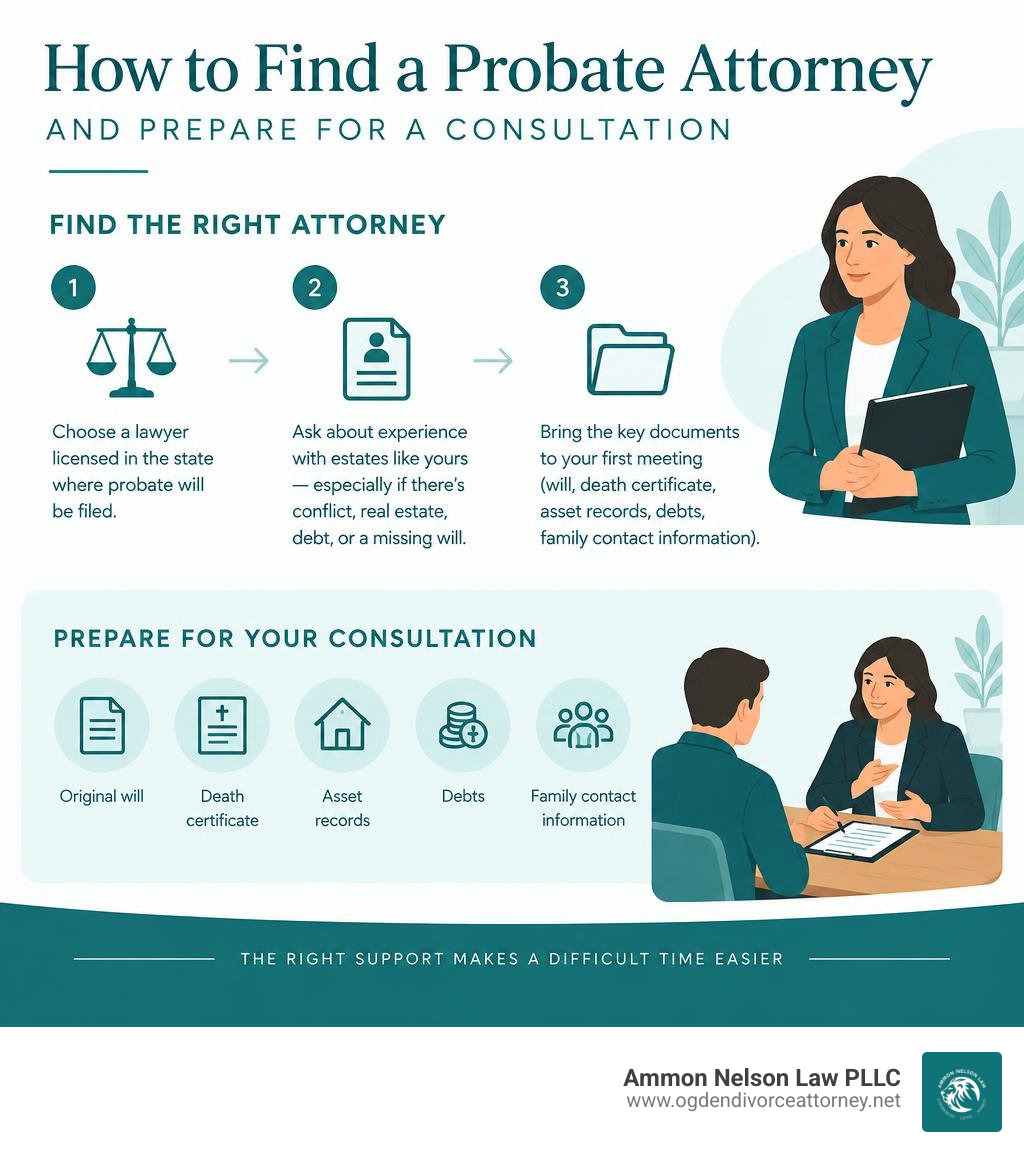
When looking for one, focus on three things:
- Choose a lawyer licensed in the state where probate will be filed.
- Ask about experience with estates like yours, especially if there is conflict, real estate, debt, or a missing will.
- Bring the original will, death certificate, asset records, debts, and family contact information to the first meeting.
Probate rules and deadlines vary by state. Some estates qualify for simplified procedures, while others need formal court administration. Legal help is especially important when family members disagree, the estate may not cover its debts, or someone challenges the will. For a broader more general overview of the court process, see probate.
I am Ammon Nelson, an attorney serving families throughout Utah through Ammon Nelson Law PLLC. As a probate attorney, I help clients understand their responsibilities and take practical next steps during an already difficult time.
What Does a Utah Probate Attorney Do During Estate Settlement?
When a loved one passes away, the legal responsibility of settling their affairs often falls squarely on an executor or personal representative. It can feel like being handed an intricate puzzle where half the pieces are hidden under couch cushions and the instruction manual is written in legal Latin. Managing these responsibilities requires adhering strictly to fiduciary obligations—the highest legal standard of care, honesty, and financial loyalty.
A lawyer guiding you through this journey acts as your navigator. From day one, counsel ensures that you handle each phase systematically:
- Fiduciary Obligations: We make certain you understand that you cannot prioritize your own interests above those of the estate or its beneficiaries. Every financial move must be transparent and legally sound.
- Estate Inventory: Every bank account, vehicle, parcel of real estate, piece of jewelry, and business interest must be tracked down, documented, and properly valued.
- Creditor Notifications: Creditors have a legal right to seek payment from estate assets before beneficiaries receive their shares. We assist with publishing the required notices and delivering direct alerts to known creditors.
- Legal Representation: Settle any disputes before the judge, file mandatory motions, and submit regular accountings to ensure complete compliance with local court guidelines.
Taking proactive steps during life helps prevent post-mortem headaches, which is why protecting your assets with an Ogden estate planning expert remains a fundamental goal for families throughout Northern Utah.
Core Duties in Estate Administration
The actual mechanics of administering an estate involve several structured, sequential tasks. Leaving out even a single statutory notice can stall proceedings for months or expose an executor to direct legal challenges.

Here is how the administrative workflow typically unfolds under proper legal guidance:
- Will Validation: The court must verify that the submitted document represents the decedent’s valid, authentic last will and testament, confirming proper execution and signatures.
- Asset Appraisal: Certain assets, particularly real property, collectibles, and private business interests, require formal valuation by certified independent appraisers to establish a clear date-of-death value.
- Debt Settlement: Legitimate debts are vetted and prioritized according to state statutory tiers, protecting the personal representative from paying low-priority claims out of order.
- Tax Filings: We help coordinate necessary final income tax returns for the decedent alongside estate income tax returns (IRS Form 1041), addressing potential transfer tax issues.
- Asset Distribution: Once creditors and tax authorities are satisfied and formal accountings are approved, the remaining property is distributed precisely according to the terms of the will or state intestacy laws.
Probate Attorney vs. Estate Planning Lawyer
People often wonder about the distinction between Utah estate planning lawyers and Utah probate attorneys. While both focus on estate law, they operate on entirely different ends of the timeline. Estate planning takes place pre-mortem (during life) to organize assets and prevent family friction, whereas probate takes place post-mortem (after death) to execute the plan through court channels.
| Feature | Estate Planning Lawyer | Utah Probate Attorney |
|---|---|---|
| Primary Timeline | Pre-mortem (while client is living) | Post-mortem (after client has passed) |
| Key Instruments | Wills, Revocable Trusts, Powers of Attorney, Healthcare Directives | Petitions for Probate, Letters Testamentary, Inventory & Accountings |
| Primary Goal | Asset protection, tax mitigation, probate avoidance | Court-supervised distribution, debt settlement, dispute resolution |
| Client Representation | The individual creator or couple | The personal representative, executor, administrator, or heirs |
| Court Appearances | Rare (primarily drafting and advisory) | Frequent (hearings, status conferences, bench trials) |
Establishing your foundational documents early clarifies how your legacy is handled, showing why every resident needs a Salt Lake City estate planning lawyer to set up proper safeguards long before court intervention becomes necessary.
Key Factors That Require Professional Legal Guidance
Not every estate glides through the legal system without turbulence. While an uncomplicated estate with cooperative heirs and straightforward assets might require minimal court oversight, certain conditions demand immediate, seasoned legal intervention.
- Family Disputes: When siblings or blended family members harbor long-standing resentments, even an ordinary heirloom can spark an expensive legal battle. Having an objective legal advocate ensures all communications adhere to the law.
- Multi-State Assets: If the deceased owned a primary residence in Weber County but held vacation cabins or rental properties in other states, an additional “ancillary probate” action must be opened in each respective jurisdiction.
- Business Succession: Operating companies cannot simply freeze while probate proceeds. A Utah probate attorney ensures immediate appointment of a special administrator to oversee payroll, vendor payments, and operational management.
- Estate Insolvency: When total liabilities exceed liquid and illiquid assets, the estate is considered insolvent. Paying creditors out of statutory order can make an executor personally liable for unpaid higher-priority debts.
Utilizing modern planning techniques like trusts for everyone, not just the wealthy allows many families to bypass these complex court hurdles entirely.
Estate Complexity and Probate Paths
Every estate enters probate along a specific procedural route dictated by asset values, document clarity, and potential objections. A Utah probate attorney will have extensive experience with these paths:
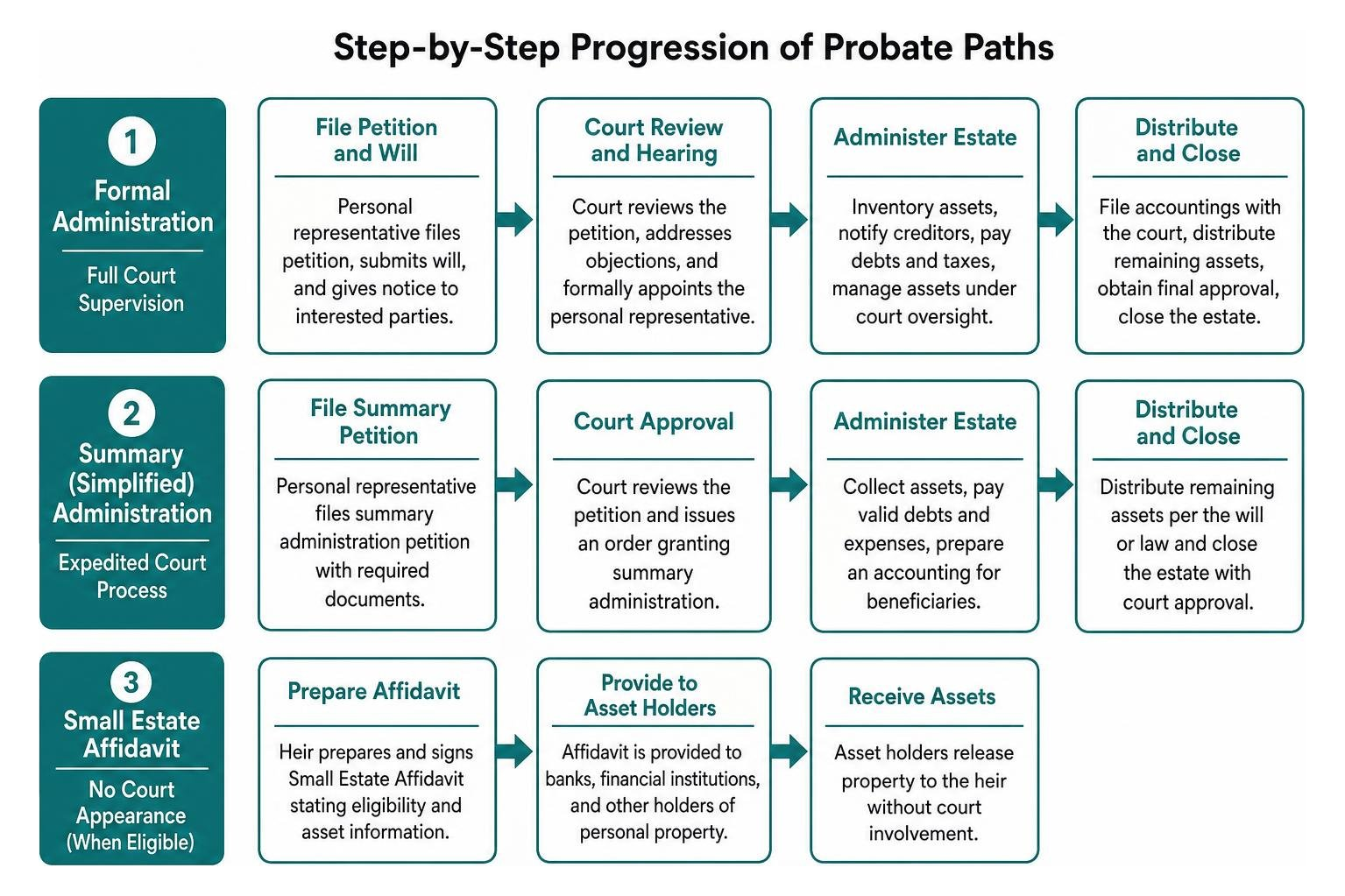
- Formal Administration: Necessary when a will is contested, asset titles are clouded, heirs cannot be located, or real estate must be sold under close judicial oversight. The court supervises each step and requires formal hearings.
- Summary (Simplified) Administration: Designed for smaller estates that fall below specific statutory gross value thresholds. This expedited pathway bypasses full administrative hurdles, significantly reducing timelines and court expenses.
- Small Estate Affidavits: In qualifying situations where personal property values remain low and no real estate is tied up in probate, heirs can often claim assets directly using a sworn affidavit without entering a courtroom.
Parallel protective proceedings, such as guardianship and conservatorship, frequently intersect with probate law when vulnerable adult beneficiaries or minor children require court-appointed fiduciaries to manage their personal safety and inherited assets.
Estate Disputes, Creditor Claims, and Taxes
When an estate becomes contentious, proceedings can shift from routine administrative management to active courtroom litigation. A Utah probate attorney protects the estate against claims that lack merit while enforcing legitimate statutory rights:
- Will Contests: Common legal grounds for challenging a will include lack of testamentary capacity (the person did not understand what they were signing), undue influence (a caregiver or relative pressured the testator), fraud, or improper execution.
- Fiduciary Removal: If an executor commingles estate funds with their personal accounts, fails to file an inventory, or refuses to communicate with beneficiaries, we can petition the court for their immediate removal and replacement.
- Creditor Claim Validation: Creditors frequently submit inflated or invalid claims against the decedent’s estate. Counsel vets each claim, requiring strict proof before any estate funds are disbursed.
- Tax Complexities: Large estates must carefully navigate federal gift, generation-skipping transfer (GST), and fiduciary income tax filings to ensure full compliance without overpaying.
Practical Steps for Hiring Legal Representation
Selecting legal counsel to handle a loved one’s estate is a critical decision. You are entrusting this professional with family finances, real property titles, and sensitive personal relationships during a period of grief.

Start your search using reputable state bar directories and legal associations. Ensure that the attorney’s primary physical office or practice area matches the court venue where the decedent held their primary legal domicile, as local probate court rules, filing processes, and judicial preferences vary across counties.
How to Choose a Qualified Utah Probate Attorney
To ensure you select the right legal representative for your family’s needs, consider evaluating potential candidates against the following criteria:
- Courtroom and Litigation Experience: While many attorneys draft basic wills, you need someone who regularly appears before local probate judges and is prepared to litigate if a dispute arises.
- Mediation and Conflict Resolution Skills: Attorneys with formal mediation experience can often defuse contentious sibling dynamics around the conference table, saving tens of thousands of dollars in protracted litigation.
- Clear, Direct Communication: Your legal counsel should demystify complex probate rules into plain, understandable terms rather than burying you in legal jargon.
- Verified Credentials: Look for active involvement in state probate bar sections, relevant legal publications, or recognized professional peer ratings.
Taking the time to evaluate these qualities mirrors the process of how to choose the best Utah estate planning attorney for your family, helping you establish a lasting partnership with a trusted legal advisor.
Legal Costs and Initial Consultation Checklist
Probate legal fees generally fall into one of three common billing arrangements:
- Hourly Billing: The most common structure, where the attorney and paralegals track time spent drafting pleadings, attending hearings, communicating with creditors, and organizing accountings.
- Flat Fees: Often offered for predictable, uncontested summary administrations where the workload is well-defined from the outset.
- Statutory Percentages: Permitted in certain jurisdictions, where fees are calculated as a set percentage of the gross estate’s value, subject to judicial review for reasonableness.
Most importantly, in standard estate administrations, the estate pays the legal fees, not the executor or personal representative out of pocket. Legal fees are treated as primary administrative expenses and are reimbursed or paid directly from estate funds before general debts are settled or distributions are made.
To maximize the efficiency of your first consultation, gather and bring the following essential records:
- The original last will and testament and any codicils (amendments)
- Certified copies of the official death certificate
- Real estate deeds, recent mortgage statements, and property tax assessments
- Bank, brokerage, and retirement account statements showing date-of-death balances
- Vehicle, boat, and trailer titles and registration documents
- Recent invoices, utility bills, medical bills, and creditor demand letters
- Full names, current mailing addresses, email addresses, and phone numbers of all heirs and named beneficiaries
- Any prior court filings, divorce decrees, or prenuptial agreements involving the decedent
You can prepare your own family records well ahead of time when you download your estate planning packet below, keeping all vital paperwork organized in one secure location.
Frequently Asked Questions About Estate Settlement
Who typically pays for probate legal services?
Legal fees incurred to administer an estate are classified as administrative expenses under state probate codes. This means they are paid directly out of the decedent’s estate assets. The executor or personal representative does not pay these fees personally, provided they act in good faith on behalf of the estate. If the personal representative advances filing fees or court costs from personal funds early in the process, they are entitled to direct reimbursement from estate bank accounts prior to general creditor claims or beneficiary inheritances.
What are the consequences of managing probate without an attorney?
Attempting to navigate complex probate procedures without professional legal assistance carries significant personal risk for the executor. Common pitfalls include:
- Personal Liability: Paying lower-tier debts (like credit cards) before higher-priority obligations (like funeral expenses, administrative costs, and taxes) can leave the executor personally on the hook for unpaid balances.
- Distribution Errors: Transferring property to heirs before creditor claim windows expire can force the executor to recover those distributed funds personally if unexpected valid claims arise.
- Tax Penalties: Missing statutory deadlines for estate income or personal final tax filings can result in substantial IRS interest charges and administrative penalties.
- Procedural Delays: Submitting defective petitions, missing required legal notices, or failing to post appropriate fiduciary bonds can cause probate courts to reject filings, stalling the settlement process indefinitely.
How quickly must a will be filed after passing?
State statutes typically impose strict legal deadlines for submitting a decedent’s original will to the appropriate district or county probate court. In many jurisdictions, any person in possession of an original will must deliver it to the court clerk within 10 to 30 days of receiving notice of the death.
Failing to submit the will within the statutory window without reasonable cause can expose the custodian to liability for any damages suffered by interested parties who were prevented from receiving their lawful inheritances on time.
Conclusion
Stepping into the role of an executor or navigating the probate process as an heir can quickly become overwhelming when paired with the loss of a family member. You do not have to shoulder the burdens of court filings, asset appraisals, creditor demands, and family mediation alone.
At Ammon Nelson Law PLLC, we provide clear, results-driven legal counsel designed to protect your personal interests and guide your family smoothly through every administrative milestone. Whether you need assistance with an uncontested summary settlement or require robust courtroom representation during a contested will dispute, our team is prepared to help across Utah.
For dedicated legal support tailored to your unique family circumstances, schedule a consultation for comprehensive probate representation today.