
Frequently Asked Questions About Support Orders
Can parents agree to waive payments completely?
No. Parents cannot agree to drop child support on their own. The law views financial support as the child’s basic right. A judge will reject any private deal that leaves a child without needed care.
What happens if the paying parent moves to another state?
The child support order remains valid across all state lines. The Uniform Interstate Family Support Act (UIFSA) lets agencies work together. Your local agency can garnish wages and collect payments from a parent living in another state.
Is financial support taxable on income tax returns?
No. Child support payments are tax-neutral under federal tax rules. The parent who pays cannot deduct payments on their tax return. The parent who receives the money does not report it as taxable income.
Child Support Basics for Utah Parents
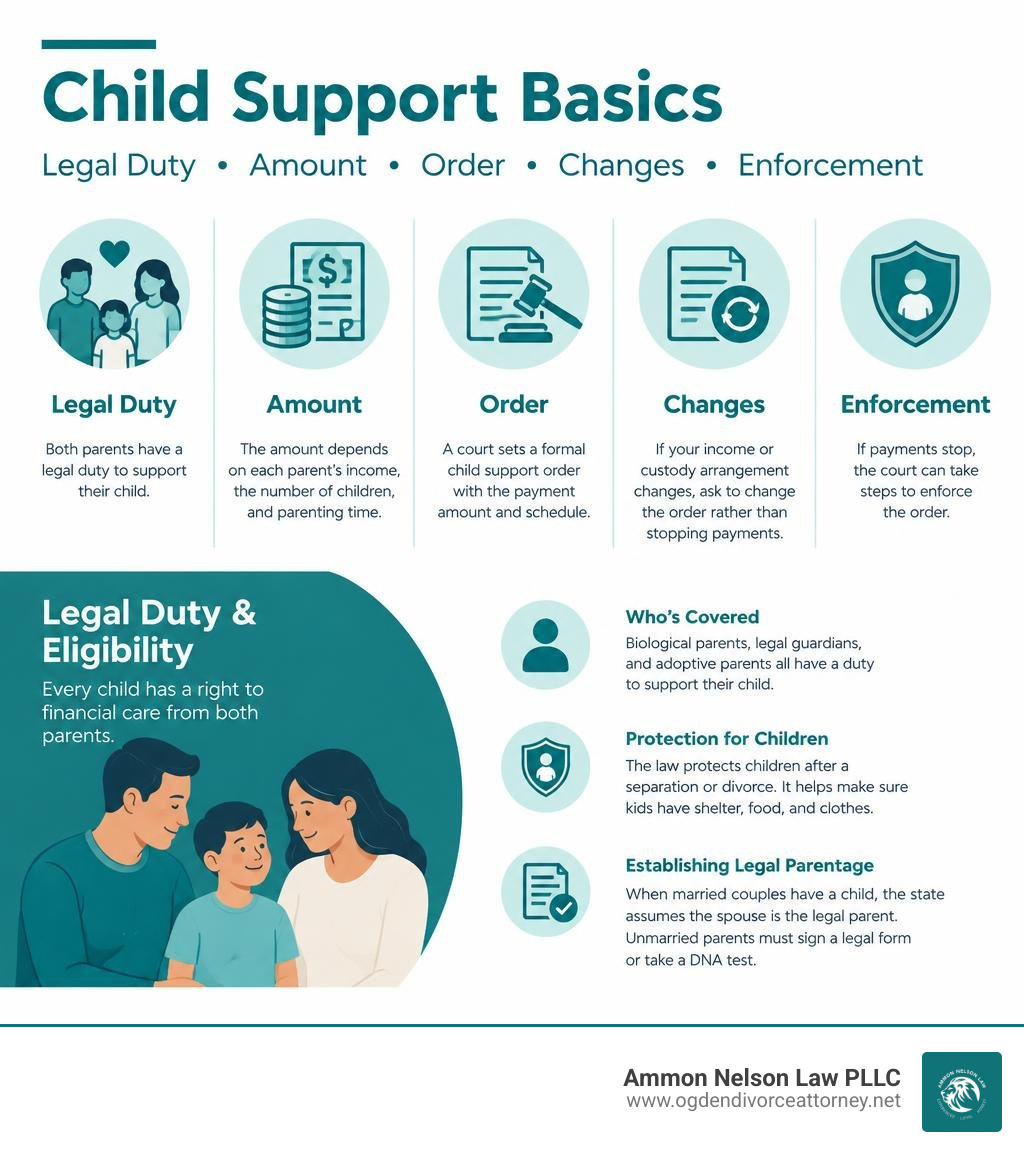
Child support is money a parent pays to help meet a child’s needs. In Utah, both parents have a duty to support their child. The amount depends on factors such as each parent’s income, the number of children, and parenting time. If your income or custody arrangement changes, ask to change the order rather than stopping payments on your own.
I’m Ammon Nelson, a Northern Utah family law attorney who helps parents with child support matters. This guide explains how support is set, changed, and enforced so you can understand your next steps.
What Every Parent Needs to Know About Legal Duty and Eligibility
Every child has a right to financial care from both parents. This rule applies to biological parents, legal guardians, and adoptive parents. The law protects children after a separation or divorce. It makes sure kids have shelter, food, and clothes.
Before a judge orders payments, the law must establish legal parentage. When married couples have a child, the state assumes the spouse is the legal parent. Unmarried parents must sign a legal form or take a DNA test.
To protect your rights, keep three things you must know about child support in mind:
- Support belongs to the child, not the parent.
- Parents cannot trade away support during divorce talks.
- Only a judge or state agency can change an active order.
Who Pays and Who Receives Payments
In most family cases, one parent has primary physical custody. The child lives with this custodial parent most of the year. This parent pays for daily items like food, school supplies, and utility bills directly.
The other parent is the noncustodial parent. This parent sends monthly payments to balance the load. When non-parents step in to raise a child, navigating child support in guardianship becomes necessary so the legal guardian receives financial help from both biological parents.
How Custody and Parenting Time Impact Payments
The number of overnight stays a child spends with each parent changes the payment amount.
- Sole Physical Custody: The child spends at least 225 overnights per year with one parent. The noncustodial parent pays the full base support amount.
- Joint Physical Custody: The child spends at least 111 overnights per year with each parent. Courts use a shared custody worksheet. Both incomes and exact overnight counts decide the final sum.
- Split Custody: Each parent takes primary care of at least one child. The court runs calculations for both homes and offsets the amounts.
How Courts Calculate Child Support Obligations
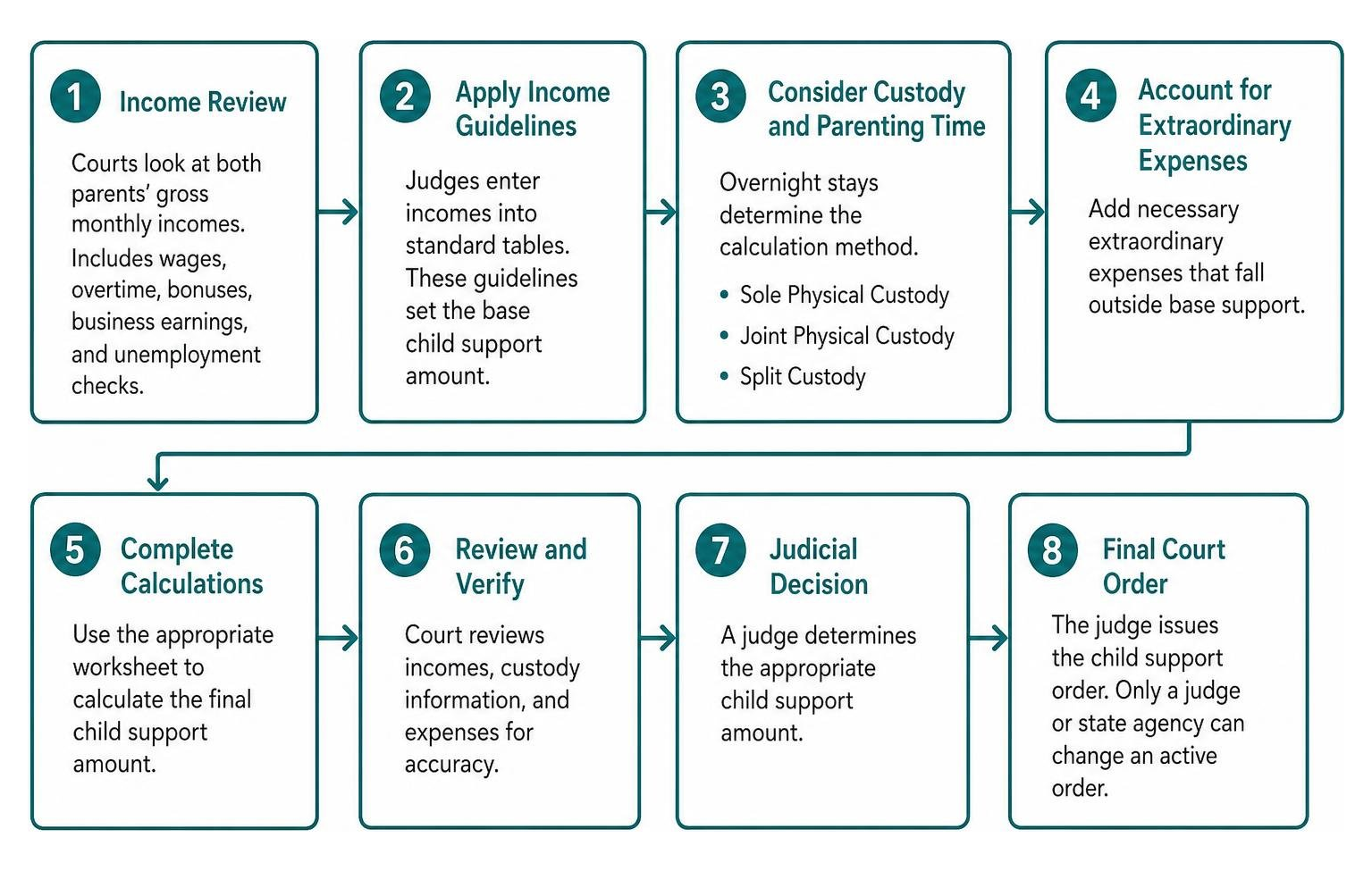
Courts use clear guidelines to set monthly payment amounts. They look at both parents’ gross monthly incomes. Gross income includes regular wages, overtime pay, bonuses, business earnings, and unemployment checks.
Judges enter these earnings into standard tables. You can learn more about calculating payments under the state child support schedule by reviewing state formulas. Official rules and worksheets are also available through the Utah Courts Child Support Guidelines.
Income Guidelines and Extraordinary Expenses
Base child support pays for basic daily needs. It covers housing, groceries, and regular clothing. Children often have other important bills that fall outside base support. These are extraordinary expenses.

Parents usually split extraordinary expenses equally or share them based on their income percentages.
| Expense Category | Covered by Base Support? | How Parents Split the Cost |
|---|---|---|
| Basic Food and Shelter | Yes | Included in base monthly check |
| Everyday Clothing | Yes | Managed by the custodial parent |
| Health and Dental Insurance | No | Added to order; shared by parents |
| Uninsured Medical Bills | No | Usually Split 50/50 after copays |
| Work-Related Childcare | No | Shared equally or by income ratio |
| Special Educational Needs | No | Added by specific court ruling |
Special Rules for Military and Incarcerated Parents
Special rules apply when a parent serves in the military or goes to prison.
For service members, child support rules count base pay, housing allowances (BAH), and food allowances (BAS). Combat pay receives special reviews. The military requires active-duty members to support their families even before a civilian court issues a formal order.
For incarcerated parents, prison time can cut income down to zero. In the past, courts imputed income as if the parent worked a full-time job. Current rules allow parents serving long prison terms to ask for a temporary reduction. This prevents large debts from building up while they cannot work.
Establishing and Modifying an Order Through State Agencies
Parents can set up child support through a private divorce attorney or through state offices. State support agencies stay neutral. They do not represent either parent. Their main job is to make sure the child gets needed funds.
Agencies help locate missing parents and order genetic paternity tests. If you want to know about managing your child support case smoothly, you can work directly with the Utah Office of Recovery Services (ORS) to track and collect monthly payments.
Applying for a Child Support Order
Starting a support case takes a few clear steps:
- Submit an Application: You can apply online with the state agency or file a petition in district court. Reviewing how to obtain child support will help you prepare your paperwork.
- Serve the Legal Papers: The other parent receives a Summons and Complaint. They must respond within their legal deadline (usually 21 to 30 days).
- Disclose Financial Records: Both parents provide pay stubs, tax returns, and child care bills.
- Sign a Stipulation or Attend Court: If parents agree on the numbers, they sign a written agreement called a stipulation. If they disagree, a judge decides the amount at a hearing.
Requesting a Formal Modification
Life changes over time. A support order from three years ago might not fit your life today. You can ask the court to modify your order if you experience a major change in circumstances.
Valid reasons to change an order include:
- A long-term job loss or large pay cut.
- A big increase in the other parent’s income.
- A permanent shift in custody or overnight visits.
- A change in the child’s medical or educational needs.
Always file for a change right away. A judge can only adjust payments starting from the date you file your motion. A court cannot erase debt that built up before you filed.
Enforcement Actions and When Payments End
Child support orders carry the full weight of the law. Support rules cross state lines easily. Every state runs a central office to process and track payments. You can review resources like the New York CourtHelp Support Guide to see how courts handle support rules across the country.
Consequences of Unpaid Child Support
Missing child support payments leads to fast legal trouble. Unpaid amounts become a judgment that gains interest each month.
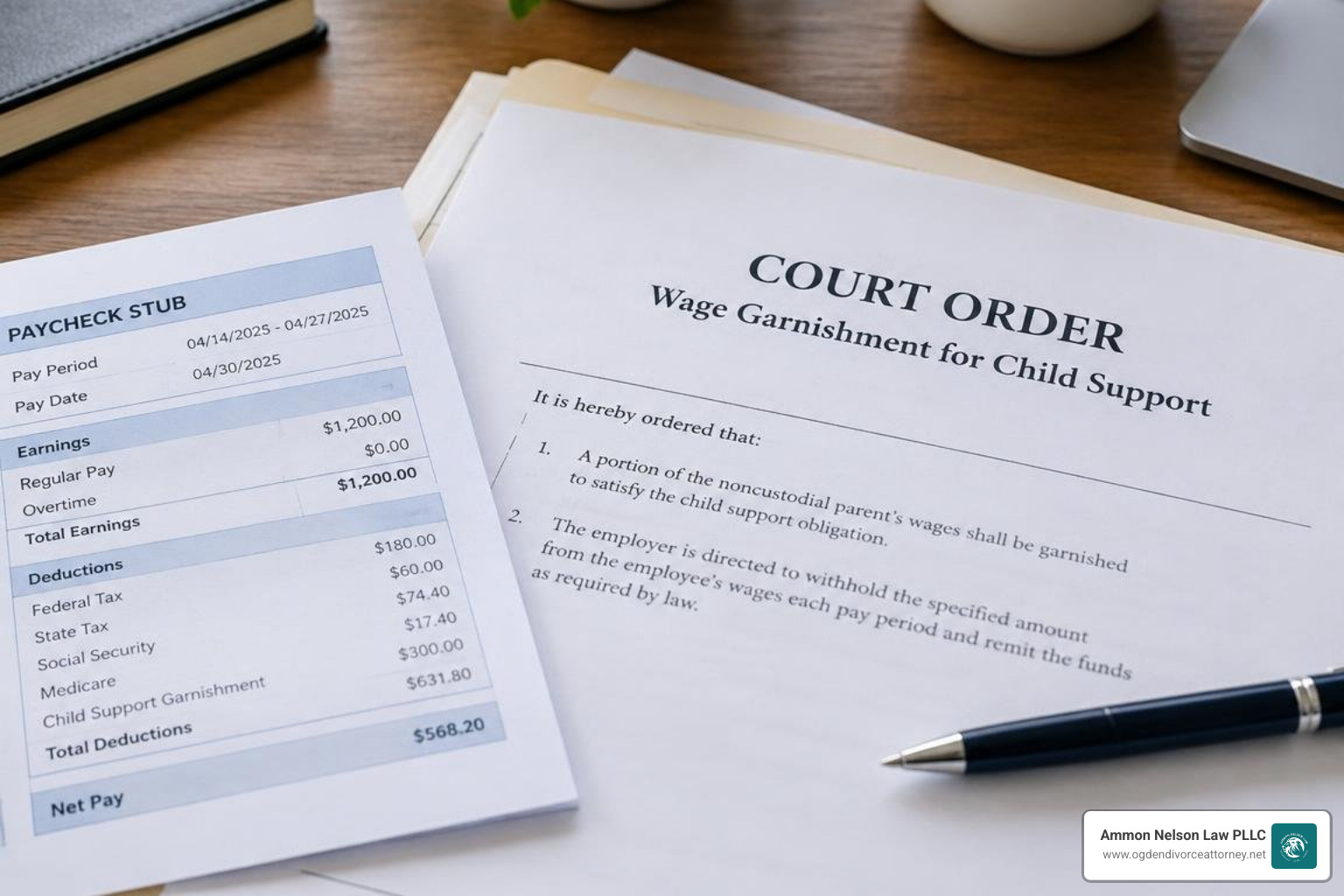
State agencies and courts use strong tools to collect past-due money. Common state child support enforcement tools include:
- Wage Withholding: Employers deduct support straight from paychecks.
- Tax Intercepts: The state takes federal and state tax refunds.
- License Suspensions: Agencies suspend driver’s, hunting, and professional licenses.
- Passport Denial: The federal government denies or revokes passports for large unpaid balances.
- Contempt of Court: A judge can send a parent to jail for refusing to pay when they have the money.
Termination Rules and Age Limits
A parent’s duty to pay child support does not last forever. In most cases, payments end when the child turns 18 or graduates from high school, whichever happens later.
Support can end earlier if the child:
- Gets married.
- Joins the military on active duty.
- Becomes legally emancipated by a court.
Support can also last longer. If an adult child has a severe physical or mental disability, a judge can order support to continue into adulthood.
Conclusion
Child support keeps children safe and fed. It makes sure kids have what they need to grow up strong. Clear orders protect both parents and prevent money arguments.
If you need to establish, adjust, or enforce an order, our legal team can help. Contact Ammon Nelson Law PLLC today for trusted legal representation for child support in Northern Utah.