Why Legal Guardianship of an Adult Matters for Your Family
Legal guardianship of an adult is a court-supervised relationship where a judge appoints someone to make decisions for another adult who cannot manage their own personal care, finances, or both. Here’s what you need to know:
Quick Answer: Adult Guardianship Basics
- What it is: A legal process where a court grants someone authority to make decisions for an incapacitated adult
- When it’s needed: When an adult cannot manage personal care, finances, or health decisions due to dementia, disability, illness, or injury
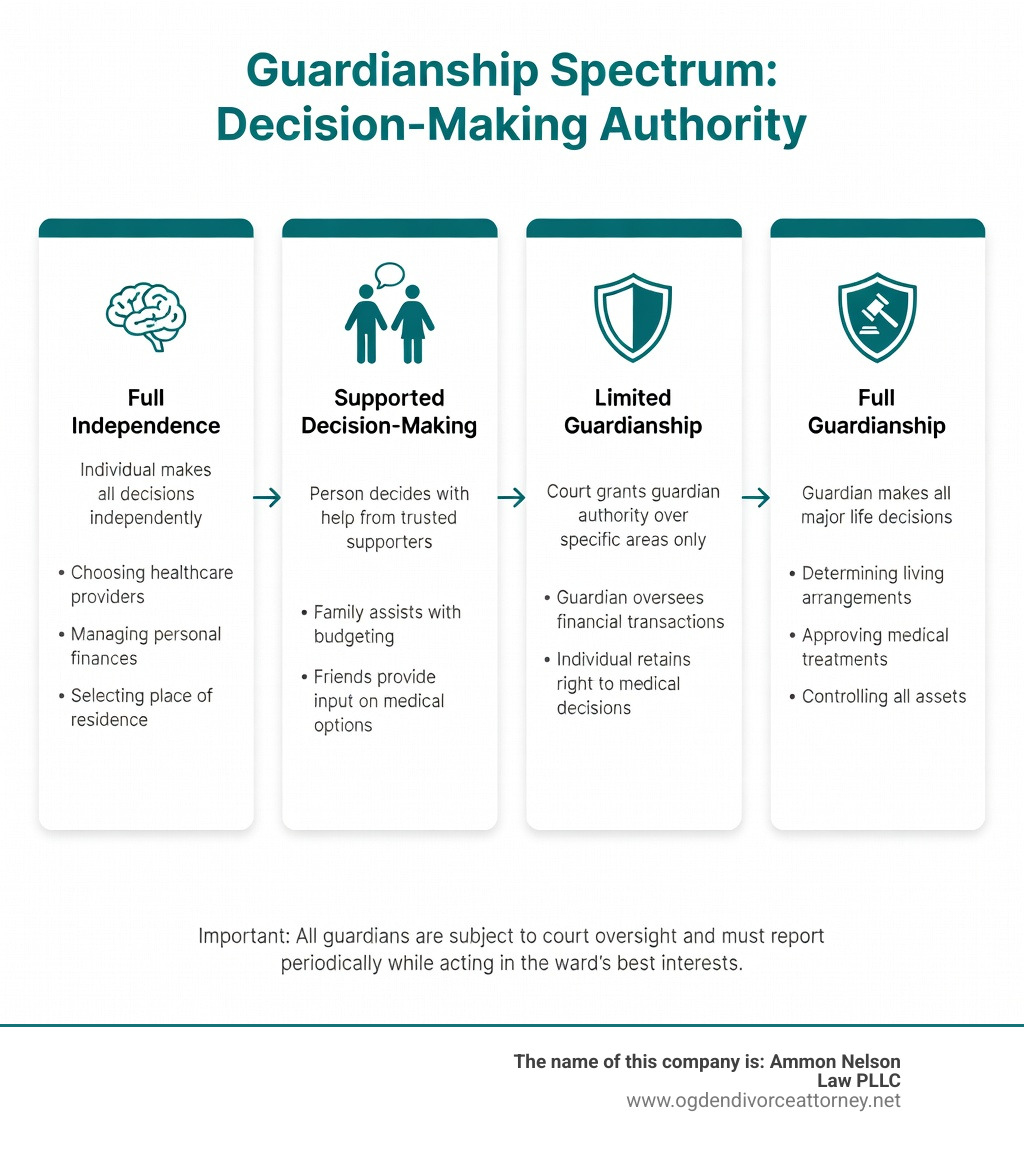
- Types: Limited (specific decisions only), plenary/full (most decisions), temporary, or emergency
- Who decides: A judge evaluates medical evidence and appoints a guardian based on the adult’s best interests
- Alternatives exist: Power of Attorney, Advance Directives, Supported Decision-Making, and trusts may avoid guardianship
- Court oversight: Guardians must report regularly to the court and act in the ward’s best interests
Sometimes, because of aging, disease, or injury, people need help managing some or all of their daily affairs. This creates real challenges for families—especially when a loved one can no longer pay bills, make medical decisions, or protect themselves from exploitation. Guardianship removes fundamental rights like choosing where to live, managing money, or making healthcare choices. That’s why courts treat it seriously and why you should explore every alternative first.
The decision to seek guardianship is never easy. You’re balancing your loved one’s safety with their autonomy and independence. You might be watching a parent struggle with dementia, or supporting an adult child with disabilities who’s turning 18. Maybe you’re dealing with a sibling whose mental illness or substance use puts them at risk. Whatever your situation, understanding the legal framework helps you make informed decisions that truly protect your family member while preserving their dignity.
I’m Ammon Nelson, and over my years practicing family law in Utah, I’ve guided many families through the complex process of legal guardianship of an adult, helping them steer the emotional and legal challenges while exploring every option to preserve their loved one’s independence. My goal is always to find the least restrictive solution that keeps your family member safe.
Defining Adult Guardianship and the Role of the Court
When we talk about legal guardianship of an adult, we are entering a territory where the law must step in to protect those who can no longer protect themselves. In Utah, the court system views this as a protective measure of last resort.
A “guardian” is a person or entity appointed by a judge to take over decision-making for an “incapacitated person,” often referred to in legal documents as the “ward” or the “protected person.” However, it is vital to remember that the court itself is considered the “superior guardian.” This means the person we appoint as guardian is essentially an agent of the court, acting under its watchful eye and authority.
The court’s role isn’t just to sign a piece of paper and walk away. Judges in Ogden and Salt Lake City take an active role in ensuring that the proposed guardianship is actually necessary. They look for clear and convincing evidence that the individual lacks the capacity to make safe or practical decisions. You can find a deeper dive into these Guardianship key concepts and resources to see how the national legal community defines these roles.

When is Legal Guardianship of an Adult Necessary?
We often see families come to us when a crisis has already occurred. Perhaps a parent with advanced dementia has wandered off, or an adult child with a significant intellectual disability is nearing their 18th birthday and needs continued support.
Under Utah law, a guardian may be appointed if an adult is determined to be “incapacitated.” This doesn’t just mean they make bad choices (we all do that sometimes!). It means they lack the ability to adequately evaluate information, make decisions, or provide for their own basic life necessities. Common scenarios include:
- Cognitive Decline and Dementia: When Alzheimer’s or other forms of dementia impair memory and judgment to the point where the person can no longer manage their own safety.
- Intellectual or Developmental Disabilities: For young adults who, upon turning 18, still require help with daily living and healthcare decisions.
- Mental Illness: When severe conditions prevent a person from understanding the consequences of their actions.
- Substance Abuse: In extreme cases where drug or alcohol dependency has rendered the person unable to care for their physical health or safety.
- Physical Health Issues: When a sudden injury, like a traumatic brain injury, leaves someone unable to communicate their wishes.
Types of Adult Guardianship and Protective Arrangements
Not every situation requires a “plenary” or full guardianship. In fact, Utah courts strongly prefer “limited guardianship.” We believe in using a “scalpel rather than a sledgehammer”—taking away only the rights that the individual is truly unable to exercise.
- Plenary (Full) Authority: This gives the guardian rights and responsibilities similar to those a parent has for a minor child. It covers almost all aspects of life, from where the person lives to what medical care they receive.
- Limited Guardianship: This is custom to the person’s specific needs. For example, the ward might still be allowed to choose their own social activities or vote, but the guardian makes decisions regarding surgery or large financial transactions.
- Temporary Orders: Sometimes a situation is urgent but might be resolved soon. A temporary guardianship can bridge the gap while a more permanent solution is sought.
- Emergency Guardianship: If there is an immediate risk of “substantial harm” to the person’s health or safety, the court can fast-track an appointment.
To help you visualize the differences, we’ve broken down the two primary roles often involved in these cases:
| Feature | Guardianship of the Person | Guardianship of the Estate (Conservatorship) |
|---|---|---|
| Primary Focus | Personal care, health, and safety | Financial management and assets |
| Decisions Made | Medical treatment, housing, clothing, food | Paying bills, managing investments, selling real estate |
| Key Responsibility | Monitoring caregivers and daily well-being | Protecting and growing the ward’s property |
| Reporting | Annual reports on the ward’s condition | Annual financial accountings and audits |
For more details on how these services are applied in Northern Utah, you can visit our page on Guardianship and Conservatorship services.
Guardianship vs. Conservatorship in Utah
In Utah, we distinguish between the “person” and the “estate.” While “guardian” is the term for the person looking after the individual’s physical well-being, a “conservator” is the person looking after the money.
Often, the same person serves in both roles, but not always. A conservator is especially advised when the ward has significant assets, ongoing business affairs, or complex investments. The conservator’s job is to ensure the ward’s bills are paid and their property is protected from exploitation. They have a fiduciary duty—the highest legal standard of care—to manage that money solely for the benefit of the protected person.
The Step-by-Step Process to Obtain Legal Guardianship of an Adult
Obtaining legal guardianship of an adult is a rigorous process designed to protect the rights of the person being “guarded.” You can’t just walk into a courthouse in Ogden and walk out with a guardianship order.
Here is the general path we follow:
- The Petition: We file a formal request with the district court in the county where the adult lives (such as Weber, Salt Lake, or Davis County). This petition outlines why the guardianship is necessary and who is being proposed as the guardian.
- The Physician’s Report: A crucial piece of evidence is the Certificate of Medical Examination (CME). A doctor must examine the adult and provide a professional opinion on their capacity to make decisions.
- Notice Requirements: Due process is vital. We must provide formal notice to the “interested parties.” This typically includes the adult’s spouse, adult children, parents, and siblings. They have the right to support or object to the petition.
- Court Visitor or Guardian ad Litem (GAL): The court often appoints a “Visitor” or a “Guardian ad Litem.” The GAL is an attorney whose job is to represent the best interests of the alleged incapacitated person. They will interview the adult and the proposed guardian and report back to the judge.
The Role of Medical Evaluations and Court Hearings
The heart of the case is the capacity assessment. During the court hearing, the judge will examine the medical evidence and listen to testimony. The adult for whom guardianship is sought has the right to be present, the right to their own attorney, and the right to present their own evidence or cross-examine witnesses.
The judge isn’t just looking for a diagnosis; they are looking for functional impairment. Can the person manage their medications? Do they understand their financial situation? Are they vulnerable to “sweetheart scams” or elder abuse?
If the judge decides a guardian is necessary, they will also determine if the proposed guardian is fit. This involves background checks and, in cases of conservatorship, the requirement of a “bond”—essentially an insurance policy that protects the ward’s estate if the conservator mishandles the money.
Exploring Less Restrictive Alternatives
Because legal guardianship of an adult is so restrictive, Utah law requires that we explore “less restrictive alternatives” first. We always ask: “Can we achieve safety without taking away their rights?”
- Supported Decision-Making (SDM): This is a popular and empowering alternative. Instead of a guardian making the choice, the adult chooses a “supporter” (like a family member or friend) to help them understand information and communicate their decisions. It’s like having a co-pilot instead of someone taking over the steering wheel.
- Durable Power of Attorney (POA): If the adult still has the capacity to sign legal documents, they can appoint an agent to handle financial or healthcare matters. This avoids court intervention entirely.
- Advance Directives and Living Wills: These documents allow a person to state their medical preferences in advance, ensuring their wishes are followed even if they become unable to speak for themselves later.
- Representative Payee: For individuals whose only income is Social Security or VA benefits, these agencies can appoint a “payee” to manage those specific funds without a full court guardianship.
For more information on these options, the Department of Justice provides a great resource on Less restrictive alternatives to guardianship. You can also learn how these fit into a broader strategy on our page about estate planning and guardianship.
Formal vs. Informal Support Systems
Sometimes, a combination of informal supports is enough to keep someone safe. This might include:
- Trusts: Setting up a living trust where a trustee manages assets for the beneficiary.
- HIPAA Releases: Allowing family members to talk to doctors without having full legal authority over the person.
- Community Resources: Utilizing “Meals on Wheels,” senior centers, or home health aides to provide oversight.
Responsibilities, Rights, and Restoration
Once appointed, a guardian has a massive responsibility. You are a fiduciary, meaning you must act with the utmost good faith. You are not “the boss” in the sense that you can do whatever you want; you are the protector of the ward’s “best interests.”
Key responsibilities include:
- Annual Reports: You must file a report with the court every year detailing the ward’s physical and mental condition.
- Financial Accountings: If you are a conservator, you must provide a detailed list of every penny spent from the ward’s estate.
- Encouraging Independence: Even under guardianship, you should involve the ward in decisions as much as possible. If they can choose what to wear or what to eat, let them!
The Uniform Law Commission-Guardianship and Protective Arrangements Act provides national standards that many states, including Utah, look to for best practices in monitoring and oversight.
Contesting or Terminating Legal Guardianship of an Adult
Guardianship doesn’t have to be permanent. If a person’s condition improves—perhaps they recover from a stroke or stabilize on new medication—they can petition the court for a “restoration of rights.”
Similarly, if a guardian is not doing their job, is being abusive, or is exploiting the ward, interested parties can petition for the guardian’s removal. A guardian can also resign, though they remain responsible until the court appoints a successor.
Due process is the shield that protects the ward. Whether it’s the initial petition or a later request to end the guardianship, the court ensures that everyone’s voice is heard and that the ward’s civil liberties are only restricted as much as absolutely necessary.
Frequently Asked Questions about Adult Guardianship
Who is eligible to serve as a guardian?
In Utah, a guardian must generally be at least 18 years old, of sound mind, and not have a criminal history that would make them unfit (especially felonies involving harm to children or the elderly). While the court prefers family members, they will appoint professional fiduciaries or public guardians if no suitable family member is available.
How much does it cost to establish guardianship?
The cost varies depending on the complexity of the case. You have court filing fees, attorney fees, and the cost of the medical evaluation. If the case is contested (meaning someone objects), the costs can rise. However, in many cases, the attorney’s fees can be reimbursed from the ward’s estate once the guardianship is established.
Does a guardian become financially responsible for the ward’s debts?
No! This is a common fear. As a guardian or conservator, you are not personally liable for the ward’s debts. You use their money to pay their bills. You only become responsible if you co-sign on a loan or if you breach your fiduciary duty and cause a loss to the estate.
Conclusion
Navigating legal guardianship of an adult is an emotional journey. It marks a significant shift in family dynamics, often moving from being a child to being a protector for a parent, or from a parent to a lifelong advocate for an adult child.
At Ammon Nelson Law PLLC, we understand the nuances of Utah law and the specific needs of families in Ogden, Salt Lake City, and throughout Northern Utah. We don’t believe in a “one-size-fits-all” approach. Whether you need to establish a limited guardianship, fight an unnecessary petition, or explore estate planning tools to avoid court altogether, we provide customized, results-driven representation.
Our goal is to ensure that your loved ones are safe, their assets are protected, and their dignity remains intact. If you’re feeling overwhelmed by the “Who is the Boss?” question in your family, let us help you find the right legal balance.
Contact a Utah guardianship and conservatorship attorney today to schedule a consultation and take the first step toward peace of mind for your family.