Why Choosing the Right Utah Estate Planning Attorney Matters for Your Family’s Future
A Utah estate planning attorney helps Utah families protect assets, avoid probate, minimize taxes, and ensure their wishes are honored through legal documents like wills, trusts, powers of attorney, and healthcare directives. The right attorney will guide you through Utah-specific laws, create customized plans for your unique family situation, and provide ongoing support as your life changes.
Key factors when choosing a Utah estate planning attorney:
- Experience and credentials – Look for attorneys with 20+ years of practice and specialized certifications like CELA (Certified Elder Law Attorney)
- Specialized focus – Choose attorneys who focus 100% on estate planning rather than general practice
- Client reviews – Seek firms with 5-star ratings and testimonials about personalized service
- Clear pricing – Expect free consultations and transparent flat-fee structures
- Utah law expertise – Ensure familiarity with Utah’s probate process, homestead exemptions, and trust laws
Estate planning is about more than legal documents. It’s about protecting the people you love and ensuring your family avoids painful probate processes, costly legal disputes, and unnecessary taxes. One CPA firm described a well-crafted living trust as “the best they had ever seen” – that’s the level of quality you deserve.
Without proper estate planning, Utah’s intestacy laws decide who gets your assets. Your family could face months of probate court, public disclosure of your private affairs, and frozen assets when they need financial support most. If you become incapacitated without healthcare directives, courts may appoint strangers to make medical decisions for you.
Many Utah families put off estate planning because the process feels overwhelming or they assume it’s only for the wealthy. The truth is that everyone with loved ones needs a plan – whether you own a home, have minor children, run a business, or simply want to ensure your wishes are followed.
As Ammon Nelson, I’ve helped countless Northern Utah families steer estate planning with personalized legal solutions that protect what matters most. My firm focuses on making complex legal processes simple and accessible, ensuring you understand every decision in your Utah estate planning attorney journey.
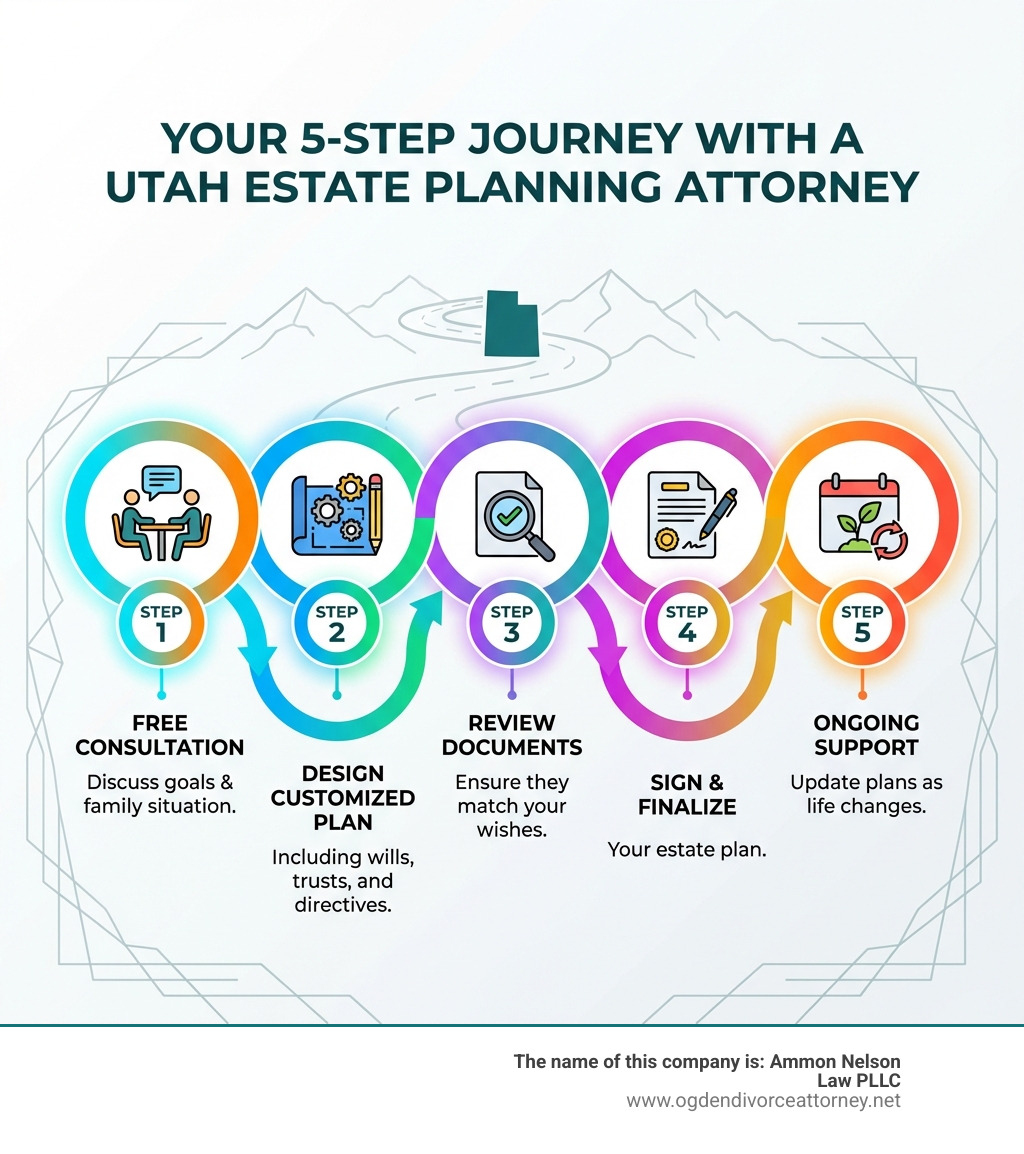
Why Estate Planning Is Essential for Utah Residents

Living in Northern Utah, from the busy streets of Salt Lake City to the scenic foothills of Ogden, we understand the value of hard work and the importance of community. But hard work isn’t just about what you earn today; it’s about what you preserve for tomorrow. For residents in our corner of the Beehive State, estate planning isn’t just a “rich person’s problem”—it’s a vital tool for every family.
At its core, estate planning is the process of arranging the management and disposal of your estate during your life and after you pass away. We often tell our clients that it is a “gift” to their families. Why? Because without a plan, your grieving loved ones are left to steer the complex Utah legal system alone while trying to guess what you would have wanted.
A comprehensive plan addresses several critical areas:
- Asset Distribution: Ensuring your home, savings, and personal belongings go to the specific people you choose.
- Family Legacy: Preserving your values and providing for future generations.
- Guardianship: If you have minor children, this is perhaps the most important part. You—not a judge—decide who will raise them if you are gone.
- Incapacity Planning: Deciding who handles your finances and medical decisions if you become temporarily or permanently unable to do so yourself.
By working with a Utah estate planning attorney, you move from uncertainty to total control. You can find more info about estate planning services to see how these tools fit your specific Northern Utah lifestyle.
Benefits for Asset Protection and Tax Minimization
One of the biggest misconceptions we hear in our Ogden and Salt Lake City offices is that “the government will take everything.” While that’s an exaggeration, without a plan, taxes and creditors certainly can take a significant bite out of your legacy.
Asset Protection:
We live in a litigious world. Prudent decisions made today can protect your personal and professional properties from loss due to lawsuits, creditors, or bankruptcies. A multidisciplinary approach—combining estate law with asset protection strategies—shields your hard-earned wealth from “unscrupulous creditors” and even potential divorcing spouses of your heirs.
Tax Minimization:
While Utah does not have a state inheritance tax, federal estate tax laws still apply. History shows how quickly these things change. For example, in 2011, the federal estate tax exemption was $5,000,000 with a 35% tax rate on amounts exceeding it. Today’s exemptions are higher, but they are scheduled to “sunset” or decrease in the coming years.
Effective tax planning might involve:
- Setting up specific irrevocable trusts.
- Making charitable donations that provide tax breaks.
- Re-titling assets to maximize the “basis step-up” (a tax concept that can save your heirs thousands in capital gains taxes).
To get started on organizing your thoughts, you can Download Your Free Workbook Below.
Key Components of a Comprehensive Utah Estate Plan
A “plan” isn’t just a single piece of paper. It’s a toolkit. Think of it like a Swiss Army knife for your future; each tool has a specific purpose.
| Feature | Last Will and Testament | Revocable Living Trust |
|---|---|---|
| Probate Required? | Yes | No |
| Privacy | Public Record | Private |
| Asset Control | Only after death | During life and after death |
| Cost | Lower upfront | Higher upfront, lower later |
| Out-of-State Property | Requires multiple probates | Avoids out-of-state probate |
1. Last Will and Testament: This is your basic roadmap. It outlines who gets what and names guardians for your kids. However, in Utah, a will must go through probate to be validated.
2. Financial Power of Attorney: This allows you to designate a “trusted agent” to handle your bills, banking, and business affairs if you can’t. Without this, your family might have to go to court to get a “conservatorship,” which is expensive and stressful.
3. Advance Healthcare Directive: In Utah, this combines what used to be called a “Living Will” and “Medical Power of Attorney.” It tells doctors your wishes for end-of-life care and names someone to speak for you.
4. Beneficiary Designations: Don’t forget your 401(k) or life insurance! These often pass outside of your will or trust, so they must be kept up to date.
For those dealing with aging parents or children with disabilities, you can find more info about guardianship and conservatorship to ensure they are protected.
Understanding Utah-Specific Laws
Utah has its own set of rules that a general online form won’t account for. For instance, the Utah Uniform Probate Code governs how estates are settled.
- Homestead Exemptions: Utah law provides certain protections for your primary residence from creditors, which can be integrated into your estate plan.
- Dynasty Trusts: Utah is a “trust-friendly” state. We can create trusts that last for generations, protecting wealth from taxes and creditors for your grandkids and beyond.
- Family LLCs: For our clients in Salt Lake City and Ogden who own rental properties or businesses, a Family Limited Liability Company (LLC) can be a powerful tool to consolidate assets and provide another layer of protection.
Differences Between Wills and Trusts Under Utah Law
We often get asked, “Do I really need a trust?” While a will is a great start, a Revocable Living Trust is often the gold standard for Utah families.
A trust allows you to maintain complete control while you are alive. You can add property, take it out, or even cancel the trust entirely. But the magic happens when you pass away. Because the trust “owns” the assets, there is no need for a judge to get involved. This keeps your affairs out of the public record. In contrast, a will becomes a public document once it enters probate—meaning anyone can see what you owned and who you left it to.
If you choose a trust, we often include a “Pour-over Will.” This acts as a safety net, catching any assets you forgot to put in the trust and “pouring” them in after you pass. You can read more about living trust quality and legal documents to understand why quality drafting matters.
Navigating the Utah Probate Process and Why to Avoid It
Probate is the court-supervised process of authenticating a last will and testament if the deceased made one, or distributing assets according to state law if they didn’t. In Utah, while we have “informal probate” which is simpler than in some other states, it can still be a headache.
Why do most people want to avoid it?
- It’s Slow: Even a simple probate in Northern Utah can take 6 months to a year.
- It’s Public: Your nosy neighbor (or a predator looking for “new money” targets) can look up exactly what your heirs received.
- It’s Costly: Attorney fees, court costs, and personal representative fees add up quickly.
- Asset Freezes: Sometimes, accounts are frozen during the initial stages of probate, leaving families without cash for immediate needs.
Our goal as a utah estate planning attorney is often to help you bypass this system entirely. You can find more info about probate services if you are currently facing this process with a loved one’s estate.
How a Utah Estate Planning Attorney Uses Trusts to Avoid Probate
By “funding” a revocable living trust—which means re-titling your house, bank accounts, and investments into the name of the trust—you ensure that these assets pass directly to your beneficiaries.
This is especially critical if you own real estate outside of Utah (like a cabin in Idaho or a condo in Arizona). Without a trust, your family might have to go through probate in every single state where you owned land. A trust consolidates everything under one “umbrella,” saving your family thousands in multi-state legal fees.
The Role of a Utah Estate Planning Attorney in Trust Administration
Setting up the trust is only half the battle. When the time comes, someone has to “administer” it. This involves:
- Fiduciary Duties: Ensuring the trustee follows the law and the trust’s instructions.
- Record Keeping: Tracking all income and distributions.
- Tax Compliance: Filing the necessary tax returns for the estate.
- Avoiding Conflict: Acting as a neutral third party to explain the “why” behind your decisions to beneficiaries.
We provide legal guidance to trustees to ensure they fulfill these duties without making mistakes that could lead to personal liability or family feuds.
Specialized Planning: Business Succession, Special Needs, and Elder Law
Estate planning isn’t just about the “end.” It’s about the “now” and the “what if.”
Business Succession:
Did you know that family businesses generate an estimated one-half of the U.S. Gross National Product and pay half of all wages? If you own a business in Ogden or Salt Lake City, your business is your legacy. We help you create clear succession plans so your life’s work doesn’t crumble the moment you step away. This includes inter-generational transfers and tax-efficient strategies for selling or gifting the business.
You can read more about estate planning and contracts law to see how business and estate law overlap.
Special Needs and Elder Law Issues in Utah
For families with loved ones who have disabilities, traditional estate planning can actually be dangerous. If you leave money directly to a person receiving government benefits (like SSI or Medicaid), they could be disqualified from those benefits.
Supplemental Needs Trusts (SNTs): These allow you to provide for a loved one’s quality of life without jeopardizing their essential government support. We also look at ABLE accounts, which are tax-advantaged savings accounts for individuals with disabilities.
Elder Law: As we age, the cost of long-term care becomes a major concern. We assist with:
- Medicaid Planning: Helping you qualify for help with nursing home costs while legally protecting assets for your spouse.
- Long-Term Care Options: Navigating the complex world of assisted living and home care.
There’s more info about trusts for everyone because these tools are designed to protect people at every stage of life.
How to Choose a Utah Estate Planning Attorney
Choosing an attorney is a big decision. You aren’t just buying a document; you are choosing a partner for your family’s future.
What to Look for in a Utah Estate Planning Attorney
- Experience Levels: Look for a firm with deep roots. For example, some top Utah attorneys have over 30 or 40 years of experience. You want someone who has seen how these documents actually play out in court ten or twenty years later.
- Specialized Focus: Some lawyers do “a little bit of everything.” For estate planning, you want someone who lives and breathes this area of law.
- Client Reviews: 5-star ratings on Google tell a story. Look for words like “patient,” “knowledgeable,” and “made it simple.”
- Credentials: While not always necessary, look for specialized certifications like a CELA (Certified Elder Law Attorney). There are very few in Utah, and they represent the gold standard in elder law.
To help you prepare for a meeting, Download Your Estate Planning Packet Below.
Cost of Hiring a Utah Estate Planning Attorney
“How much is this going to cost?” It’s the elephant in the room. In Utah, pricing typically depends on complexity.
- Flat Fees: Many firms offer flat-fee packages for standard estate plans (Will, Trust, Power of Attorney, etc.). This gives you peace of mind knowing the price upfront.
- Hourly Rates: Usually reserved for complex business litigation or ongoing probate administration.
- Free Consultations: Most reputable Utah estate planning attorney firms offer a free initial consultation. This is your chance to “interview” the lawyer and see if they are a good fit for your family.
The Risk of DIY: While “online kits” are cheap, they often fail to comply with Utah-specific laws or aren’t “funded” correctly. Saving $1,000 now could cost your family $10,000 in probate fees later. As one attorney put it, professional planning offers the “convenience of DIY but with the counsel only a human expert can provide.”
Common Mistakes and When to Update Your Plan
The biggest mistake? Doing nothing. But even if you have a plan, it can become a “zombie” document—dead, but still walking around.
Common Pitfalls:
- Failing to Fund the Trust: A trust is like a suitcase; it only works if you put your stuff inside it. If your house isn’t deeded to the trust, it’s going to probate.
- Choosing the Wrong Executor: Just because someone is your oldest child doesn’t mean they are good with paperwork or neutral in family disputes.
- Ignoring Beneficiary Designations: If your ex-spouse is still the beneficiary on your life insurance, they get the money—regardless of what your new will says!
When to Review Your Utah Estate Plan
We recommend a check-up every 3 to 5 years. However, certain “Life Events” should trigger an immediate review:
- Marriage or Divorce: Your legal status changes everything.
- Birth or Adoption: You need to ensure the new addition is provided for and has a guardian named.
- Moving: If you moved to Utah from another state, your old documents might not take advantage of Utah’s specific laws (like our homestead exemptions).
- Financial Changes: If you start a business or receive a large inheritance.
You can explore more info about Utah estate planning categories to stay updated on what’s relevant to you.
Frequently Asked Questions about Utah Estate Planning Attorneys
How do revocable living trusts help avoid probate in Utah?
A trust avoids probate because the trust itself is the legal owner of the assets. When you pass away, the trust doesn’t “die”—it just gets a new manager (your Successor Trustee). Since the owner (the trust) is still “alive,” the court doesn’t need to get involved to transfer the property.
What qualifications should I look for in a Utah estate planning attorney?
Look for an attorney who focuses heavily on estate law and probate. Check for years in practice (20+ is ideal), local experience in Northern Utah courts, and high peer and client ratings. Professional affiliations like the Utah State Bar’s Estate Planning Section are also a good sign.
How much does estate planning cost in Utah?
A basic “young family” plan (will, guardian naming, power of attorney) might be relatively inexpensive. A full “Living Trust” package for a homeowner with a family usually costs more but saves significantly on future probate fees. Most firms provide a quote after a free consultation.
Conclusion
At Ammon Nelson Law PLLC, we believe that estate planning is about more than just numbers and legal jargon—it’s about people. Whether you are in Ogden, Salt Lake City, or anywhere in Northern Utah, your family deserves a plan that reflects your values and protects your hard-earned legacy.
We pride ourselves on providing customized, results-driven representation. We don’t do “cookie-cutter” law. We listen to your goals, explain your options in plain English, and build a fortress around your family’s future.
Don’t leave your family’s peace of mind to chance. Schedule a consultation for Utah estate planning with us today, and let’s start building your legacy together. We are here to make the complex simple and the future secure.